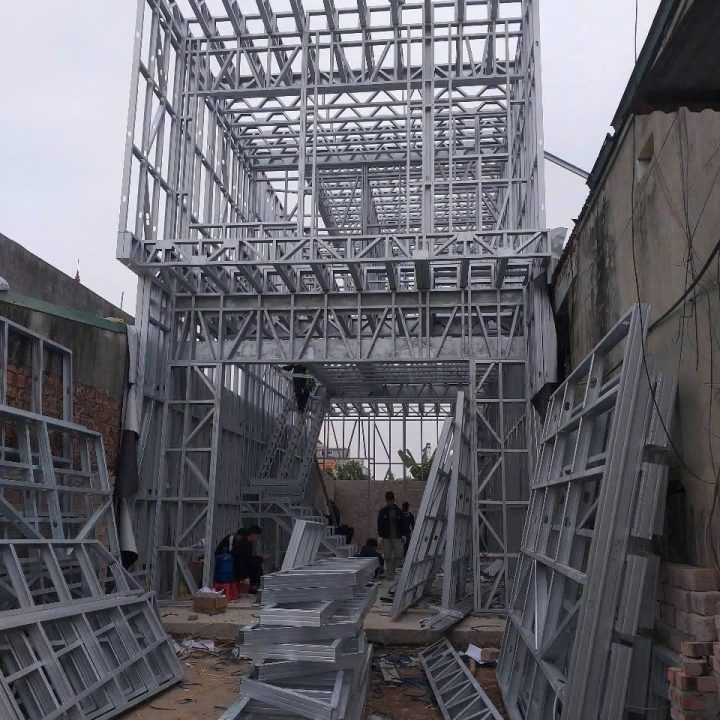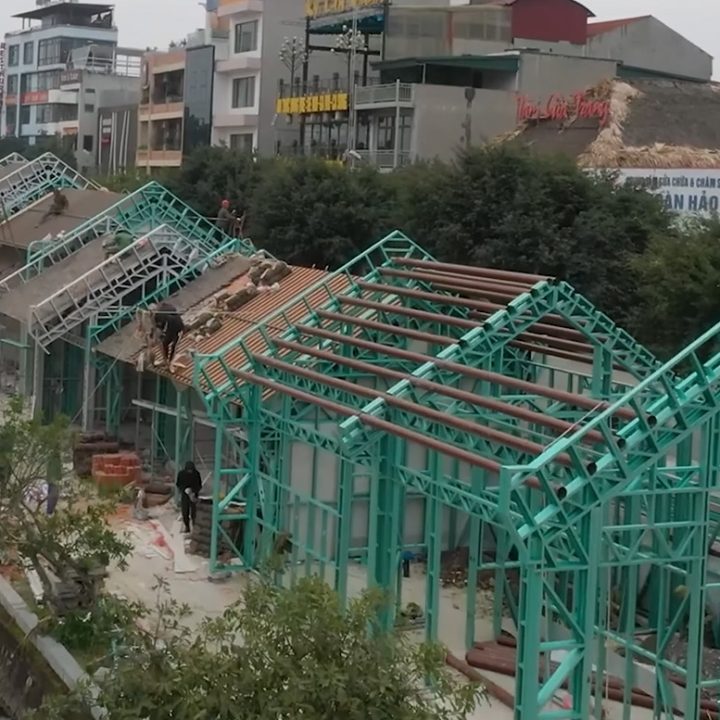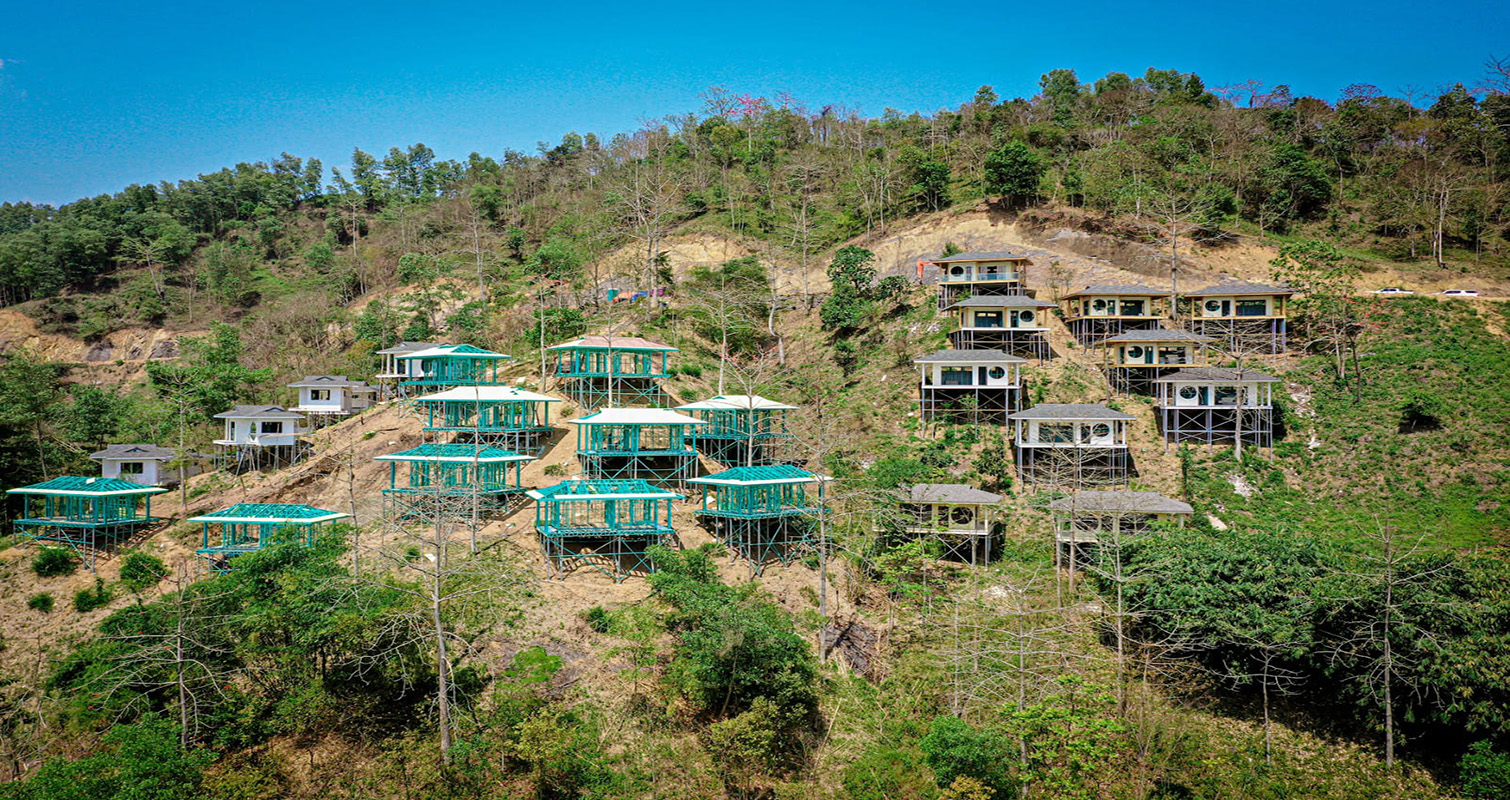


Earthquakes are among the most terrifying natural disasters, capable of causing widespread destruction in mere seconds. For regions prone to seismic activity, constructing buildings that can withstand earthquakes is a top priority.

Enter steel frames—the unsung heroes of earthquake-resistant construction. With their flexibility, durability, fire resistance, and adaptability, steel frames have become the go-to solution for protecting buildings and their occupants during seismic events.
According to the U.S. National Earthquake Information Center, the country experiences between 12,000 and 14,000 earthquakes annually, with 16 of them registering a magnitude of 7.0 or higher. In this blog, we’ll explore why steel frames are the ultimate choice for earthquake-resistant buildings and how they outperform other materials.
Overview of Earthquakes in Vietnam
– From 2019 to 2023, the number of earthquakes in Vietnam increased significantly. Specifically:
– 2019: 52 earthquakes.
– 2020: 98 earthquakes.
– 2021: 183 earthquakes.
– 2022: 293 earthquakes.
– 2023: 353 earthquakes.
– In 2024 (as of November), Vietnam has recorded over 400 earthquakes, mainly concentrated in Kon Plong district, Kon Tum province.

Causes of Earthquakes
– Induced Earthquakes: Most recent earthquakes are attributed to human activities, particularly water storage in hydroelectric reservoirs, which affects geological faults.
– Tectonic Earthquakes: Vietnam is located in an area with numerous natural geological faults, especially in the Northwest and Central Highlands regions.
Most Affected Areas
– Kon Tum: Kon Plong district has been the epicenter of earthquake activity in 2024, with over 400 earthquakes recorded.
– Other Provinces: Hoa Binh, Tuyen Quang, Phu Yen, and Quang Nam have also experienced several earthquakes.
Magnitude and Frequency
– Most earthquakes in Vietnam range from 2.5 to 4.0 on the Richter scale, causing minimal damage.
– However, stronger earthquakes have occurred, such as a 5.4-magnitude quake in Cao Bang (2020) and a 6.2-magnitude quake near Dien Bien Phu (2019).

Forecasts and Recommendations
– Experts predict that earthquake activity in Kon Tum will remain complex but is unlikely to exceed 5.5 on the Richter scale.
– Constructing earthquake-resistant buildings and updating seismic risk maps are essential to minimize damage.
History of Earthquakes in Vietnam
– Historically, Vietnam has experienced several strong earthquakes, such as a 7.1-magnitude quake in 1970 and a 6.8-magnitude quake in 1983.
– Areas like the Northwest and Central Highlands are considered high-risk zones due to active geological faults.
The Flexibility of Steel: Absorbing Seismic Energy
One of steel’s most remarkable properties is its ductility—the ability to deform significantly before breaking. This characteristic allows steel-framed buildings to absorb and dissipate the energy generated by an earthquake’s movement. Unlike brittle materials, which can crack or shatter under stress, steel bends and flexes, reducing the impact on the building’s overall structure. This flexibility ensures that the building remains intact, safeguarding the lives of those inside.

Unmatched Strength-to-Weight Ratio
Steel is renowned for its exceptional strength, boasting the highest strength-to-weight ratio of any building material. It’s seven times stronger than wood, making it an ideal choice for structures that require robust support without unnecessary weight. During an earthquake, lighter buildings are less affected by inertial forces, minimizing the risk of excessive shaking or collapse. Steel’s strength ensures that buildings can endure seismic forces while maintaining their structural integrity.
Predictability in Design and Engineering
Steel is a highly predictable material, much like a tried-and-true recipe. Engineers rely on decades of research to understand how steel reacts to various forces and how it maintains its strength over time. This predictability allows for precise calculations and designs, ensuring that steel-framed buildings can withstand earthquakes with accuracy and reliability. Whether it’s a skyscraper or a residential home, steel provides the confidence needed to create earthquake-resistant structures.

Fire Resistance: A Critical Safety Feature
One of the most significant concerns during an earthquake is the risk of fire, often caused by damaged electrical lines or gas leaks. Unlike wood, steel is a non-combustible material, significantly reducing the risk of fires during and after an earthquake. This fire resistance not only protects lives but also minimizes property damage, making steel an essential component of safe building design.
Ease of Upgrades and Retrofits
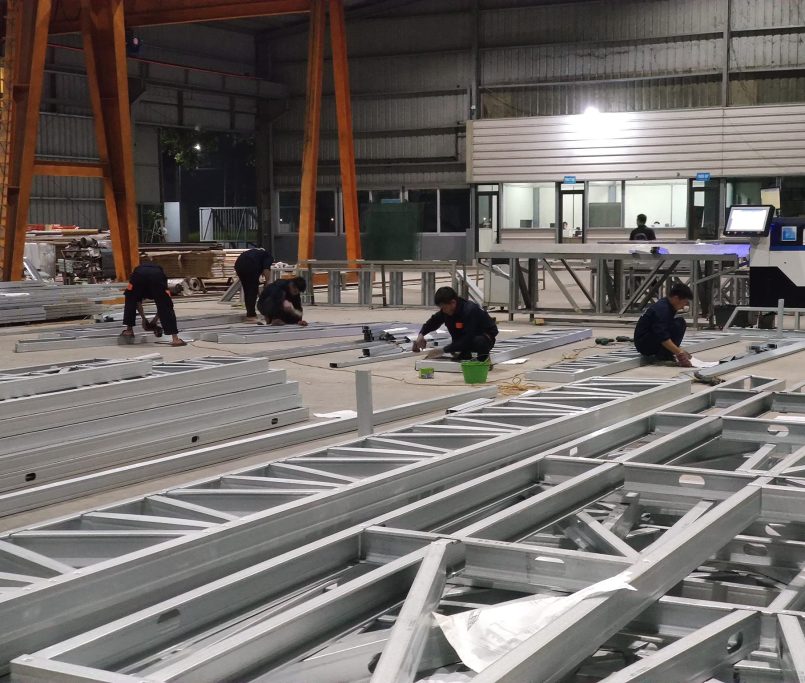
Upgrading or retrofitting steel-framed buildings to enhance their earthquake resistance is far more straightforward and cost-effective compared to wood or concrete structures. In areas with older buildings that don’t meet modern seismic standards, adding steel elements like frames, braces, or reinforcements can dramatically improve their ability to withstand earthquakes. Steel components can also be prefabricated and installed on-site with minimal disruption, making the process efficient and practical.

Sustainability and Longevity
Beyond its earthquake-resistant properties, steel is also an environmentally friendly choice. It’s 100% recyclable, reducing the need for new raw materials and minimizing waste. Additionally, steel-framed buildings have a longer lifespan, requiring fewer repairs and replacements over time. This durability not only saves costs but also contributes to sustainable construction practices.
Steel Frames for a Safer Future
In earthquake-prone regions, the choice of building materials can mean the difference between life and death. Steel frames, with their flexibility, strength, predictability, fire resistance, and ease of upgrades, stand out as the ultimate solution for earthquake-resistant construction. By choosing steel, architects and engineers can create buildings that not only withstand seismic forces but also protect lives and property during the most critical moments.
The Future of Earthquake-Resistant Construction
As technology advances, so does the potential for even more innovative earthquake-resistant solutions. Researchers are exploring new alloys and composite materials that could further enhance steel’s performance during seismic events. Additionally, smart building technologies, such as sensors and automated systems, are being integrated into steel-framed structures to monitor stress and damage in real-time. These advancements promise to make buildings even safer and more resilient in the face of natural disasters.
Moreover, governments and organizations worldwide are increasingly adopting stricter building codes and standards to ensure that new constructions are equipped to handle earthquakes. By prioritizing materials like steel and investing in cutting-edge engineering, we can create a future where communities are better prepared and protected against the unpredictable forces of nature.
Whether you’re an architect, builder, or homeowner, understanding the benefits of steel frames is crucial for making informed decisions about earthquake-resistant construction. Together, we can build safer, stronger, and more sustainable communities for generations to come.
Comparison of Strength-to-Weight Ratio Between G550 Steel and Reinforced Concrete
1. Strength-to-Weight Ratio
- G550 Steel: G550 steel has a very high strength-to-weight ratio, with a minimum tensile strength of 550 MPa. This means that G550 steel can withstand significant loads without requiring much mass, helping to reduce the overall weight of the structure. G550 steel also has high ductility, allowing it to endure deformation without breaking.
- Reinforced Concrete: Reinforced concrete combines the compressive strength of concrete and the tensile strength of steel. However, its strength-to-weight ratio is lower than that of G550 steel due to the heavy weight of concrete. Reinforced concrete is commonly used in structures requiring high compressive strength but is less suitable for applications needing lightweight and high strength.
2. Load-Bearing Capacity
- G550 Steel: With its high tensile strength, G550 steel performs better than reinforced concrete in applications requiring high strength and lightweight properties. G550 steel also offers excellent corrosion and oxidation resistance, enhancing the longevity of structures.
- Reinforced Concrete: Reinforced concrete has good compressive strength, but its tensile strength depends on the amount of steel used. Due to its heavy weight, reinforced concrete is often unsuitable for structures requiring high strength and lightweight properties.
3. Practical Applications
- G550 Steel: G550 steel is commonly used in structures requiring high strength and lightweight properties, such as prefabricated houses, pre-engineered buildings, and industrial structures. It is also favored for projects requiring fast construction and cost efficiency.
- Reinforced Concrete: Reinforced concrete is typically used in structures requiring high compressive strength, such as foundations, columns, and civil engineering projects. However, due to its heavy weight, it is less suitable for applications needing high strength and lightweight properties.
4. Conclusion
- G550 Steel has a higher strength-to-weight ratio compared to reinforced concrete, making it an ideal choice for structures requiring high strength and lightweight properties. On the other hand, reinforced concrete is more suitable for structures requiring high compressive strength and where lightweight properties are not a priority.
See more:
- Steel Frame House in Vietnam: The Ultimate Guide of Modern Construction 2025
- Light Steel Frame PN STEEL: Revolutionizing Modern Construction 2025
- Could Light Gauge Steel Framing be the pinnacle of innovation in offsite construction technology 2025?
When designing and constructing buildings, professionals prioritize risk reduction. Adhering to building codes is a fundamental step in this process. Beyond the standard international building codes that govern the design, construction, and maintenance of commercial and residential structures, there are specific seismic codes. These codes ensure that buildings can withstand the forces generated by earthquakes.
While earthquake-resistant buildings may appear ordinary from the outside, they incorporate several critical features that enhance their resilience during seismic events. Here are five key elements:
Flexible Foundations
A flexible foundation can significantly improve a building’s ability to withstand earthquakes. One approach involves placing the structure on pads that isolate it from the ground, allowing the pads to move while the building remains stable. Another method, detailed in a 2019 research paper, involves using a reinforced concrete foundation slab with crisscrossing strips, placed over a sand cushion. This design, combined with a protective trench around the foundation, minimizes the transfer of seismic forces to the building, enhancing its stability.
Seismic Dampers
Seismic dampers are essential for absorbing the energy generated by earthquakes. Originally developed by engineers working with NASA in the 1960s for rocket swing arms, these dampers have evolved into fluid-based systems used in both space launches and earthquake-resistant buildings. Seismic dampers absorb destructive energy, protecting the structure. Larger dampers can handle greater forces, with some capable of withstanding up to 1,100 tons. Researchers are also exploring low-cost alternatives, such as graphene-coated rubber pads, for use in residential and commercial buildings.
Effective Drainage Systems
Proper drainage is crucial for earthquake resilience, especially in areas with loose, sandy soils prone to liquefaction—a phenomenon where soil loses strength and behaves like a liquid during shaking. Earthquake drains, which are prefabricated and wrapped in filtering fabric, help prevent liquefaction by allowing water to escape. These drains, typically 3 to 8 inches in diameter, are installed in a grid pattern and can number in the hundreds or thousands, depending on the area’s size.
Structural Reinforcement
Strengthening a building’s structure is vital for earthquake resistance. Techniques such as shear walls and braced frames help transfer lateral forces from floors and roofs to the foundation. Diaphragms, rigid horizontal planes, distribute these forces to vertical-resistant elements like walls or frameworks. Movement-resistant frames add rigidity to joints while allowing other parts of the structure to move. Shorter buildings, being less flexible, often require more reinforcement than taller ones.
Ductile Materials
Ductility—the ability of a material to deform without breaking—is a critical property for earthquake-resistant construction. Structural steel, known for its high ductility, can absorb significant energy without failing. In contrast, materials like brick and concrete are less ductile. Researchers have developed innovative alternatives, such as fiber-reinforced concrete with steel-like properties, called eco-friendly ductile cementitious composite. This material, when applied as a thin layer, has shown promise in protecting walls during simulated earthquakes. Additionally, bamboo has been used to construct affordable, earthquake-resistant homes in resource-limited regions like Indonesia, offering a sustainable and accessible solution.
Building for Resilience
Earthquakes occur tens of thousands of times each year, with some causing devastating damage. By incorporating flexible foundations, seismic dampers, effective drainage, structural reinforcement, and ductile materials, architects and engineers can create buildings that better withstand seismic forces. These measures not only save lives but also contribute to safer, more sustainable communities. Thoughtful design and construction decisions from the outset can make a significant difference in reducing the impact of earthquakes and ensuring the long-term resilience of structures.